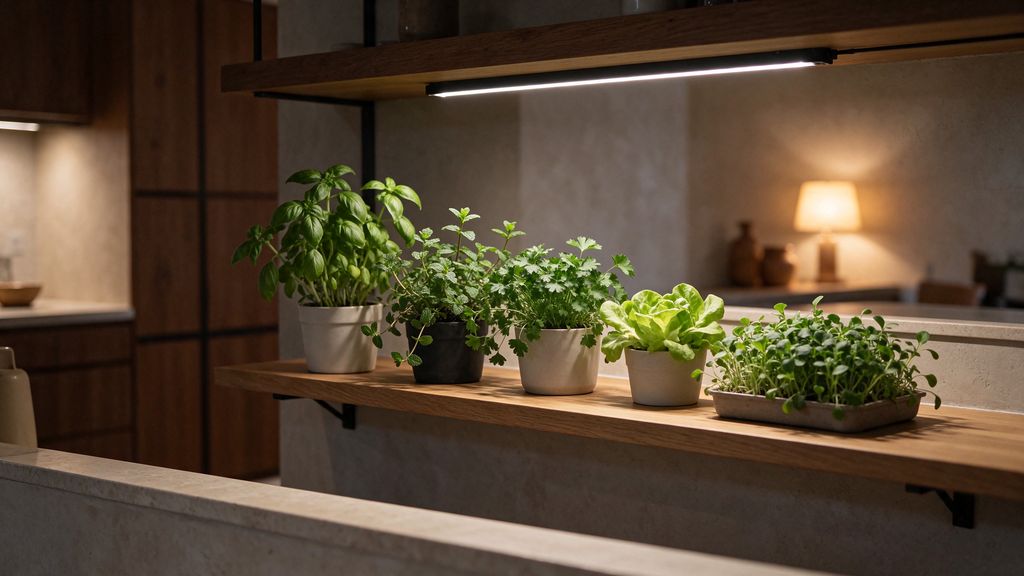

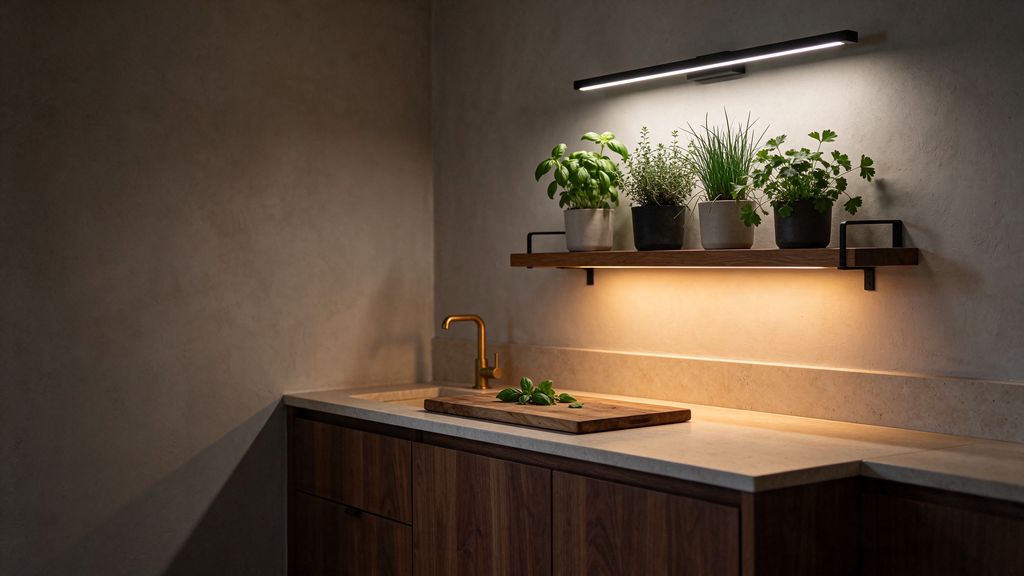
Kitchen at dusk with potted basil, thyme, chives and parsley on a wooden shelf under a slim LED bar
  1. WONE Lighting
  2. Horticultural Lighting
  3. Home Growing

Home growing

Fresh herbs and greens under LED light at home

Basil, lettuce, microgreens and garden seedlings grow well on a simple shelf with one to three LED bars and a timer. How much light each crop wants, how close the lamp should be and what it costs to run can be worked out before you buy anything.

  • 80 × 35 cmOne shelf, the size used in the model
  • 12–18 hLamp hours a day, depending on the crop
  • 6–20 mol/m²/dayDaily light, from microgreens to seedlings
  • 18 WOne 60 cm LED bar in the model

What grows well

Five crops that suit a shelf

Each crop wants a different daily dose of light. The ranges come from published horticultural research; the marker shows what the shelf model delivers at its starting setting.

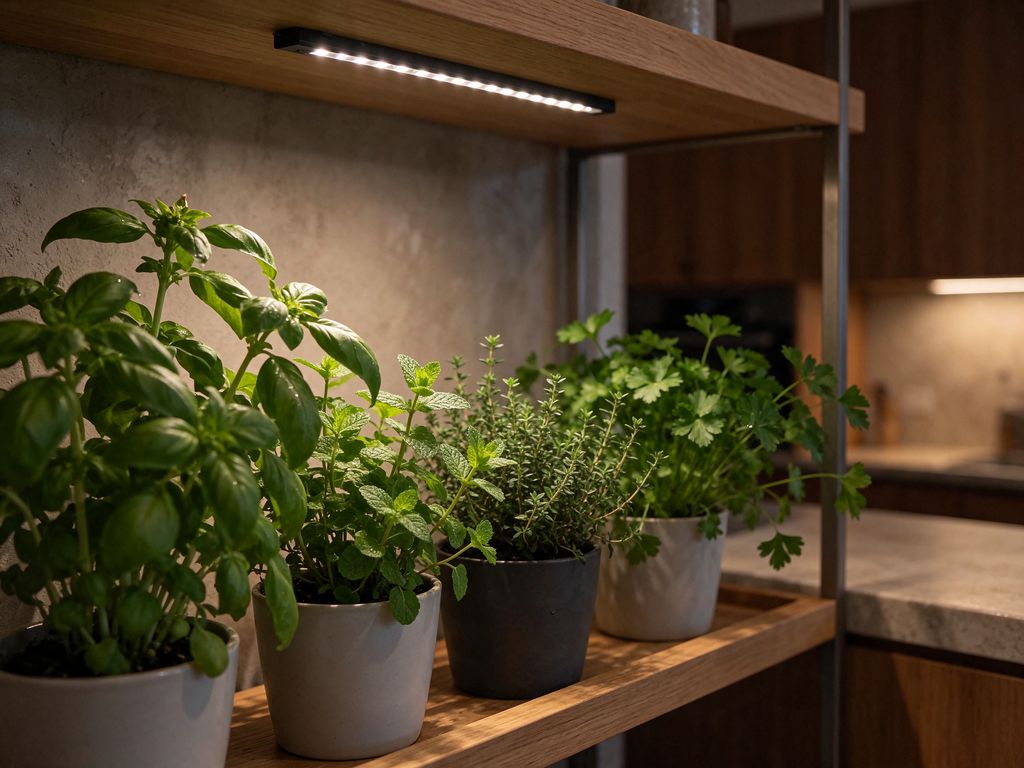
Potted basil, thyme and parsley on a shelf under an LED bar

Basil and kitchen herbs

Basil, parsley, mint, chives and thyme. Basil wants the most light and the warmest spot; mint and parsley manage with a little less. Pinch the tips and the plants stay bushy for months.

Daily light
8–14mol/m²/day
Light level
120–250µmol/m²/s
Lamp on
12–18h a day
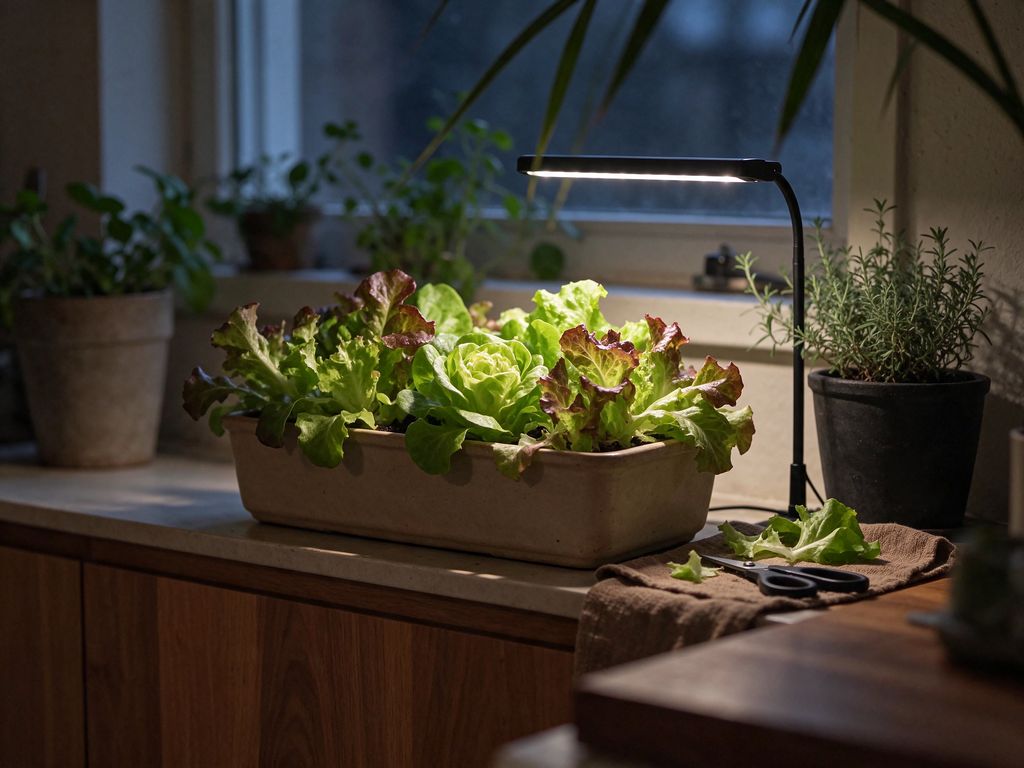
Young lettuce heads growing under white LED light

Lettuce and baby leaves

Loose-leaf lettuce, rocket and spinach can be cut again and again. Keep the room cool: warmth makes lettuce bitter and quick to bolt.

Daily light
8–14mol/m²/day
Light level
120–250µmol/m²/s
Lamp on
12–18h a day
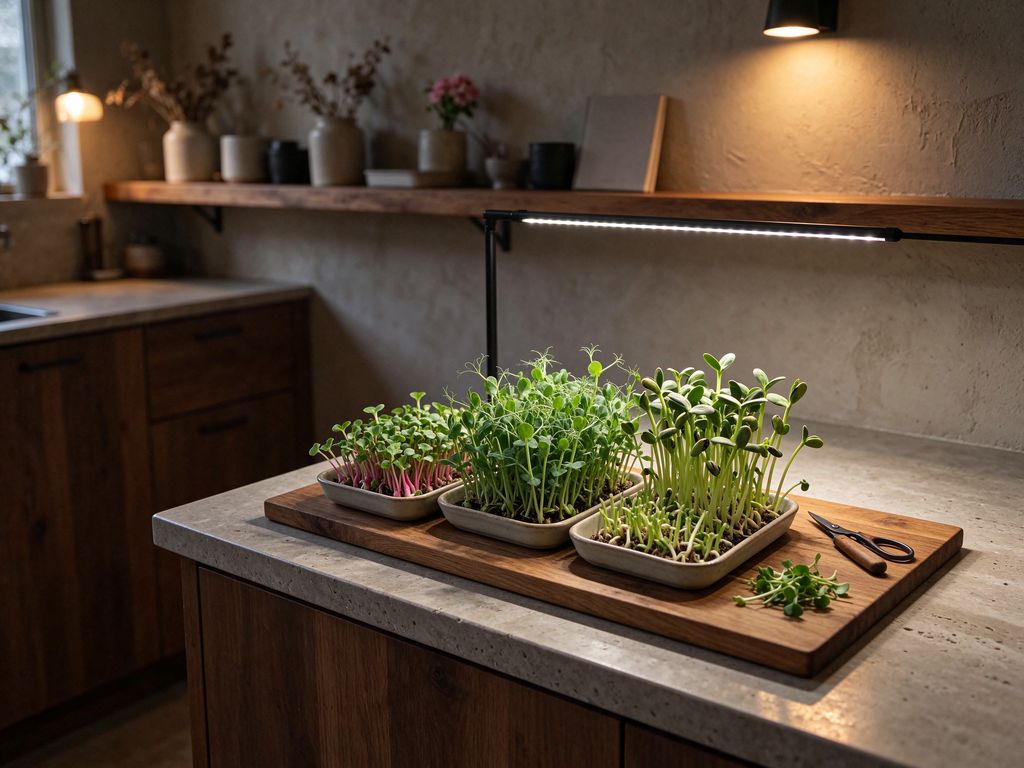
Dense tray of microgreens under soft LED light

Microgreens

Cress, radish, mustard and pea shoots on a tray, ready in a week or two. The easiest start, and the crop that needs the least light.

Daily light
6–12mol/m²/day
Light level
100–210µmol/m²/s
Lamp on
12–16h a day
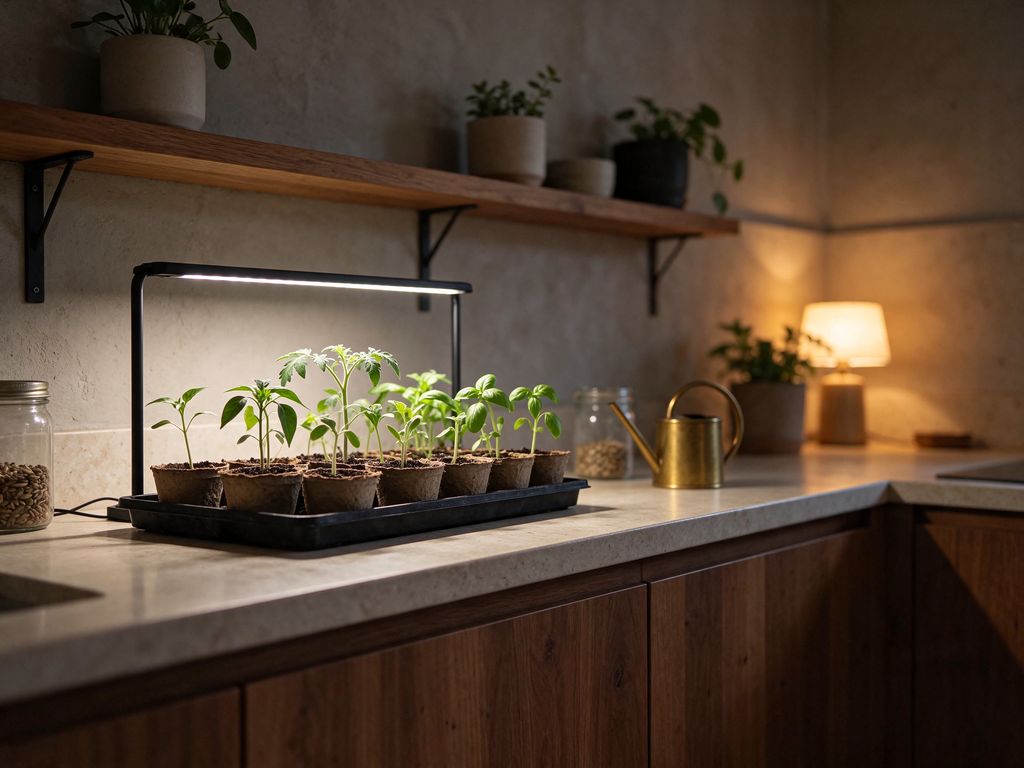
Trays of young seedlings under LED light

Seedlings for the garden

Tomato, pepper and flower seedlings started indoors in late winter. With the lamp close above them they stay short and sturdy; on a windowsill they stretch thin toward the glass.

Daily light
10–20mol/m²/day
Light level
150–300µmol/m²/s
Lamp on
14–18h a day
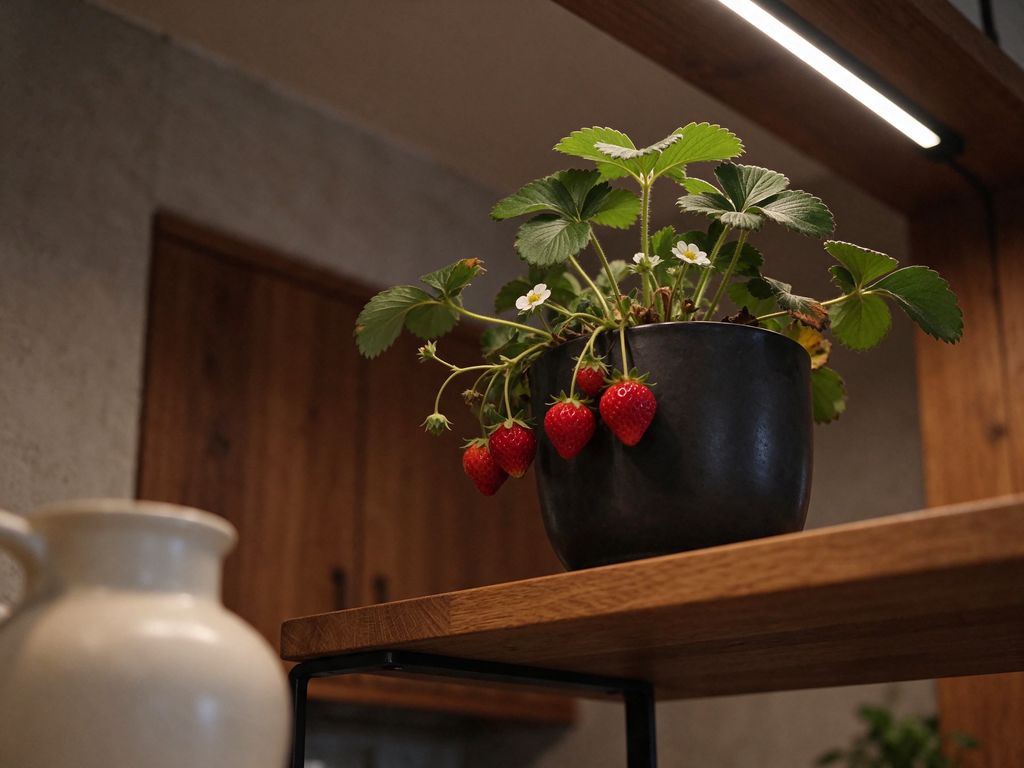
Strawberry plants with ripening fruit under LED light

Strawberries

Day-neutral varieties can flower and fruit indoors. They need more light than herbs and lettuce, a deeper shelf and some patience; a soft brush moved from flower to flower does the bees’ work.

Daily light
10–17mol/m²/day
Light level
150–300µmol/m²/s
Lamp on
14–18h a day

Shelf model

Test the shelf before you buy a lamp

Choose the crop, the number of bars, the distance and the hours. The model calculates the light on every leaf, the daily light and the electricity, and shows where the shelf falls short.

  • Colour map: calculated light at leaf height
  • Daily light compared with the crop’s range
  • Electricity per day at your settings
Home shelfSimulation
  1. Step 1/5

    The shelf

    How much space is there?

    One shelf with pots or trays under the bars. In small spaces a few centimetres change the result.

  2. Step 2/5

    The light bars

    How many bars, how far away?

    Bars hang under the shelf above. Their number and distance set the light at the leaves and the power drawn.

  3. Step 3/5

    Light at the leaves

    Do all the pots get enough?

    The map covers the whole shelf. Pots at the edges often receive less; the model shows how much less.

  4. Step 4/5

    The day

    How many hours a day?

    Hours per day turn light intensity into a daily dose, compared with what herbs, lettuce, microgreens or seedlings need.

  5. Step 5/5

    Checking it

    How can the shelf be checked?

    A handheld quantum sensor at leaf height is enough. The model tells you where to hold it and what to expect.

The model uses a generic 60 cm, 18 W LED bar, so its figures can be set beside the data sheet of any lamp you have in mind.

Setting up

Six steps to a shelf that works

In the order they matter. Most disappointing results come from the first two.

Daily light (DLI)8.7mol/m²/day · 16 h814crop bandCanopy PPFD151µmol/m²/s
  1. 01

    Hang the lamp close

    Light thins out quickly with distance. Slim LED bars usually sit 15–25 cm above the leaves; raise them as the plants grow, and lift them a little if the top leaves turn pale.

    Model start: 20 cm for herbs, 15 cm for seedlings

  2. 02

    Same hours, every day

    A plug-in timer is the most useful accessory. Most crops do well with 12–18 hours of light; longer days make up for a weaker lamp, up to a point. Plants also need their dark hours.

    At 151 µmol/m²/s for 16 hours, the leaves receive 8.7 mol/m² a day.

  3. 03

    Mind the warmth

    LED bars get warm to the touch. Passively cooled bars are silent; bars with fans can be heard in a quiet room. Leave air around the lamp and keep the room comfortable for people, and the plants will be comfortable too.

  4. 04

    Keep water and power apart

    Use saucers under the pots, water from the side so no drops reach the lamp, and keep plugs and timers off the floor and away from splashes. Mains-powered lamps must be installed as their instructions say.

  5. 05

    White light is enough

    Plants grow well under good white LED light, and it is pleasant in a living space. Pink-purple light grows plants too, but makes them hard to judge by eye. Home growing needs no UV, and nobody should look straight into an LED bar.

  6. 06

    Know the running cost

    Two 18 W bars for 16 hours use 0.58 kWh a day, about 17 kWh a month. The planner turns that into your own tariff.

Planner

Light and electricity for your shelf

Pick a crop and the hours, then enter the wattage of your lamp and your own price per kWh.

Shelf plannerSimulation

Light

Crop
Recommended: 12–18 h
Daily light the crop wants
8–14mol/m²/day
Light level needed at the leaves
139–243µmol/m²/s
at 16 h a day

Electricity

Per day
0.58kWh
Per month
17.3kWh
Cost per month
–Enter your price per kWh

Compare this light level with the PPFD the lamp’s data sheet gives at the distance you plan to use.

Hobby and commercial growing

Limits of a home shelf

A shelf keeps a kitchen in fresh herbs and salad leaves; harvests vary with variety, temperature and care. Greenhouses, vertical farms and propagation rooms are planned with their own light targets and economics.