

- WONE Lighting
- Engineering
Engineering
Lighting engineering chain
The engineering chain we apply in horticultural lighting projects, and are developing for the other areas, has six steps. The target value is defined where the light arrives; the model calculates it before installation, measurement verifies it on site, the control programme applies it to the luminaire, and the result is recorded.
 Where the target value is defined
Target value
Where the target value is defined
The effect of light is defined at the surface it reaches, by a quantity weighted for the receptor at that surface. Each area therefore has its own target quantity and unit; besides the instantaneous value, duration and dose are part of the target.
| Area | Where the light arrives | Instantaneous quantity | Duration and dose |
|---|---|---|---|
| Horticultural Lighting | Canopy; after harvest, the product surface | PPFD (µmol/m²/s), spectral ratios | DLI (mol/m²/day), photoperiod (h) |
| Livestock and Poultry Lighting | The animal’s eye level; for UV-B, the skin | Illuminance (lx), share of the area lit (%) | Light and dark hours, uninterrupted darkness (h), daily UV-B dose (kJ/m²) |
| Aquaculture Lighting | Cage and tank volume, under water | Underwater irradiance (W/m²) and spectrum, share of the cage volume that receives light (%) | Seasonal photoperiod calendar (h), light leakage during the dark period |
| Sleep and Wake Lighting | Eye, in the vertical plane | Melanopic EDI (lx) | Evening, night and morning windows (h) |
| Vitamin D and UV-B | Skin; for mushrooms, the product surface | Vitamin D-effective and erythemally weighted irradiance (W/m²) | Dose (kJ/m²), uniformity |
| Bright Light | Eye, at a stated distance | Illuminance at the eye (lx), melanopic EDI (lx), surface luminance (cd/m²) | Daily profile |
| UV and Infrared | Canopy, product surface, application plane | Weighted irradiance (W/m², mW/cm²), ePAR (µmol/m²/s) | Dose (J/m², J/cm², kJ/m²) |
| Flicker and Photosensitivity | Eye, visual field | Modulation (%) | Frequency (Hz), flashes per second |
Inputs
Inputs and target values
Inputs
Every calculation starts from four groups of information: the geometry and interior surfaces of the space the light falls on; location and date, that is, the share that daylight provides at that place in that month; the plant, person, animal or product the light is for, and its stage; and the installed luminaires and control system. The details of the inputs are on the area’s system page.
Target values
A target value comes from the regulation in force, from published research or from a calculation for the product and the application. A regulatory value is the lower limit of the design. Research usually reports a range; the value that suits the operation’s conditions is chosen from that range. A value calculated for a luminaire carries the Simulation label until it is measured.
| Application | Target value | Label |
|---|---|---|
| Broiler house | Regulatory value: at least 20 lx at the animals’ eye level over at least 80% of the usable area; at least 6 h of darkness in 24 h, at least 4 h of it uninterrupted. This is the lower limit of the design. | |
| Lactating dairy cow | 16–18 h of light and 6–8 h of uninterrupted darkness a day; a range reported in research, chosen to suit the operation’s conditions. | |
| Night-break lighting in dragon fruit | The target value is the PPFD on the stem that receives the least light; the light plan is built on the value calculated at that point. | |
| 120 cm linear photoperiod luminaire | At 34 W input, 65 µmol/s for 400–700 nm and 42 µmol/s for 700–780 nm; calculated values. |
Model and digital twin
Model and digital twin: space, luminaires, the surface the light reaches, and programme
Before installation, the model calculates the target value at the surface the light reaches, so that options can be compared before anything is ordered. It has four layers.
Space
Dimensioned geometry: compartments, benches and racks; poultry house and barn pens, cage tiers; fish cages and tanks; rooms; conveyors and trays. The reflectance of interior surfaces is included.
Luminaires
Every luminaire at its true position and mounting height, with its own light distribution and spectrum.
The surface the light reaches
Canopy, eye position, animal eye level or product surface; in aquaculture, the cage and tank volume. Values are read only on this surface or in this volume; paths and walls appear on the map and stay out of the statistics.
Programme
Operating hours, dimming and the month’s daylight; turns the instantaneous value into a daily total, a dose and energy.
Four layersSimulationSimulation. The surface layer is the calculation engine’s output for the horticultural demonstration model: a 24 × 12.8 m section with 8 tomato rows; the other layers are drawings.
Three levels
3D visualisation
Shows the space and the equipment; it calculates nothing.
Engineering simulation
Calculates light distribution, daily total, dose and energy from stated inputs and assumptions.
Operational digital twin
A simulation connected to the sensors and control system of a real installation and updated with measured data. None of today’s demonstrations is connected to a real site.
The models running today are for horticultural lighting: six demonstration models and the daily light and energy calculations. The calculation engine was compared with an independent lighting simulator in six reference rooms. The poultry house and barn model, the cage and tank model, the room model and the dose map for the mushroom line use the same engine.
- ServiceHorticultural model
- Engineering developmentVitamin D winter atlas and far-red ePAR planning
- ConceptOther models
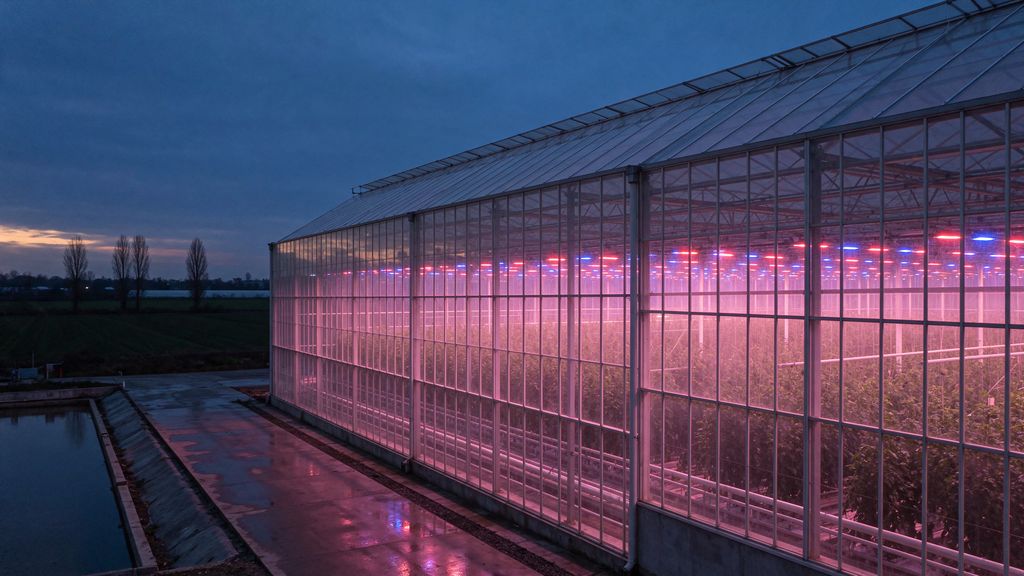
Tools and digital twins
Measurement
Shared measurement infrastructure
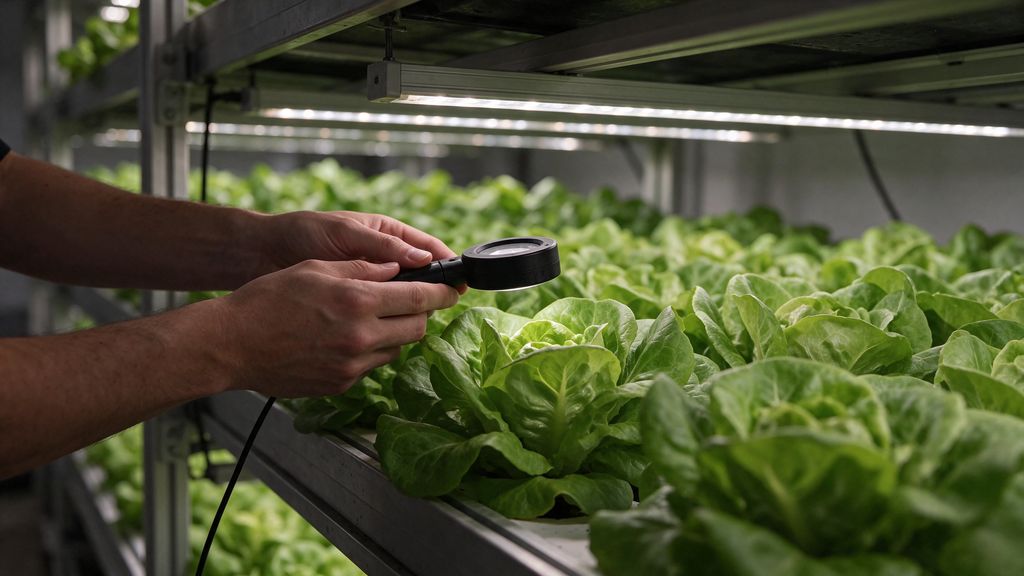
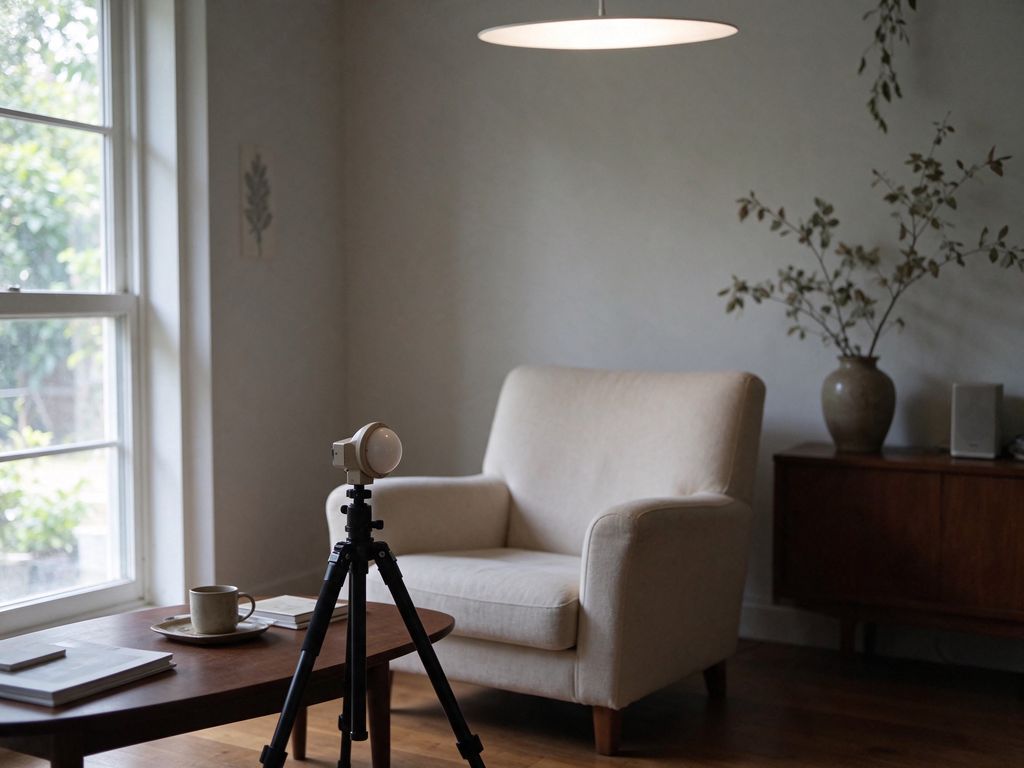
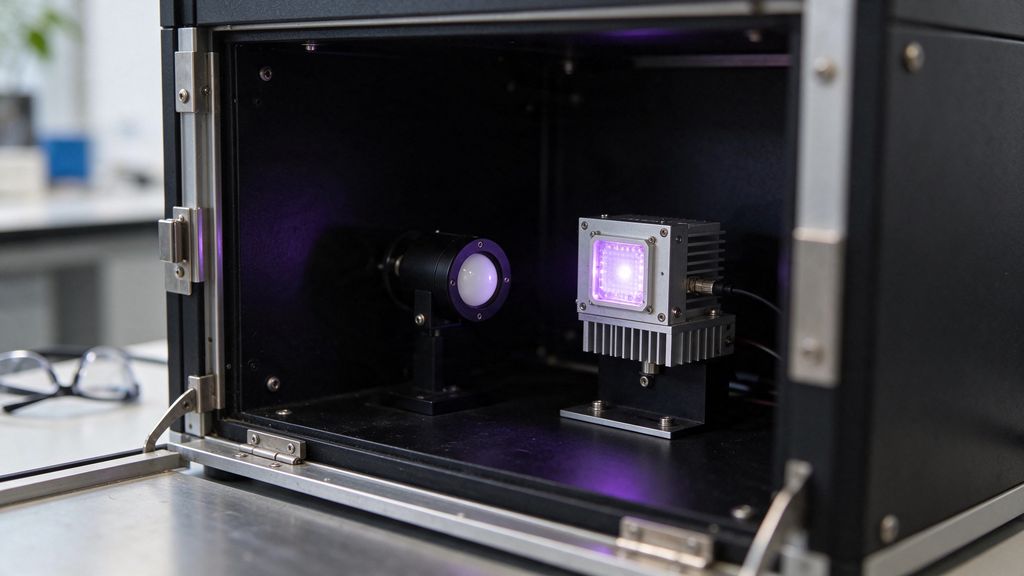
Light is measured where the target value is defined, in the quantity that suits the area, and the result is compared with the model. Every report states the instrument, the calibration date, the measurement points and the difference from the design.
| Measurement line | What is measured | Used in | Status |
|---|---|---|---|
| Light at the canopy | PPFD and spectrum, before and after installation; lamps and daylight separately; far-red reported apart from PAR | Horticultural Lighting | Service |
| Light at eye level | Spectrum, illuminance and melanopic EDI at the eye position; luminance map | Sleep and Wake Lighting, Bright Light | Concept |
| Light and night darkness at animal eye level | Illuminance grid at eye level, share of the area lit, light leakage during the dark period | Livestock and Poultry Lighting | Concept |
| Underwater light | Irradiance and spectrum by depth in the cage and tank volume; light leakage in the tank during the dark period | Aquaculture Lighting | Concept |
| UV and infrared irradiance | Spectral irradiance 250–1100 nm, weighted dose, uniformity, wavelength shift with temperature | Vitamin D and UV-B, UV and Infrared, Livestock (UV-B) | Concept |
| Temporal measurement | Light modulation at every dimming level, at switch-on, at scene changes and under fault conditions; 0.5 Hz–20 kHz | Flicker and Photosensitivity; WONE luminaires in development | Concept |
| Photobiological safety | Risk group to IEC 62471, with the measurement distance | UV and the areas for people | Concept |
Measurement rangesMeasurement range3–60 HzLiteratureUVFar-red and near-infrarednm · Hz
Control
Control: programme, dimming, dose control and interlocks
The target value is turned into a 24-hour programme and applied to the luminaire channel by channel. The programme is set up together with the operation’s climate computer or building control system.
24-hour programmeLiteratureProgramme and dimming
Photoperiod, day extension and night interruption; dawn and dusk dimming; programmes that change with age, stage or time of day.
Climate-computer link
ServiceIn greenhouses, zoning, dimming and switching are worked out with the grower’s climate-computer supplier.
Greenhouse automation
Engineering developmentVentilation, thermal and shade screens, heating and frost protection managed together with supplemental light, based on the outdoor weather forecast and current conditions.
Dose control and interlocks
ConceptIrradiance and exposure-time control on UV channels; dose tied to line speed; interlocks when a person enters or a cover is opened.
Flicker and flash limits
ConceptTemporal limits at every dimming level and scene change; under fault conditions, a steady dimmed or off state instead of periodic flashing.
Records
Records, evidence labels and status
The record shows which settings the delivered system runs with and what results it gives: programmes, measurement results, the difference between model and measurement. In UV applications the dose per batch or per day, in poultry houses and barns the dark hours, in cages and broodstock tanks the daily light programme, and for light engines the per-unit measurement table and calibration certificate are part of the record link.
Recorded with a stated instrument, method and date at a real installation or in a laboratory.
Calculated by our model from stated inputs. Shown with its assumptions.
Reported in published research or official sources.
Systems, products and illustrations not yet built or measured.
- Concept
- Engineering development
- Prototype
- Laboratory measured
- Field validated
- Commercially available
The design, measurement and control services we provide in horticultural lighting carry the “Service” label.
Systems and products without the Service label are in development and are not offered for sale.
Light recipe card: the result of a tool on one page, with its evidence labels
By area
The six links by area
The steps of the chain are the same in every area; from area to area, the inputs, the target quantities and the place of measurement change. Linked rows lead to the area’s system page.
| Area | Inputs | Target values | Model / digital twin | Measurement | Control | Records |
|---|---|---|---|---|---|---|
| Horticultural Lighting | Crop and growth stage; greenhouse, rack or propagation bench geometry; cover; location and daylight | PPFD, DLI, photoperiod, spectrum, uniformity | Greenhouse, rack and propagation bench twin; monthly DLI and energy | PAR and spectrum at the canopy | Photoperiod and supplemental light programme, dimming, climate-computer link | Measurement report and handover record; difference between model and measurement |
| Livestock and Poultry Lighting | Species, line, age and stage; poultry house and barn geometry, interior surfaces; windows, curtains and fans; location | Illuminance and area share at eye level, light and dark hours, uninterrupted darkness, spectrum | Poultry house and barn model: illuminance map, vertical illuminance on cage tiers, light leakage in the dark | Grid survey, night darkness measurement, flicker and spectrum | Programme by age and stage, dawn and dusk dimming, climate-computer link | Log of dark hours and illuminance, kept with the flock and herd records |
| Aquaculture Lighting | Species and stage, target spawning period; cage or tank geometry, water depth and turbidity; location and date | Seasonal photoperiod calendar, share of the cage volume that receives light, light leakage during the dark period | Cage and tank model: underwater irradiance distribution, seasonal calendar | Underwater irradiance and spectrum, light leakage into the tank in the dark | Calendar per cage or tank, dawn and dusk dimming | Programme and fault hours per cage and broodstock group |
| Sleep and Wake Lighting | City and season, wake-up and bed times, age range, room, window and luminaires | Melanopic EDI at eye level: low in the evening and at night, high at the end of the morning ramp | Bedroom model: light at the eye position, hour by hour | Spectrum and melanopic EDI at the eye position, flicker | Evening scene, night mode, morning ramp | Measurement table per unit; weekly trend kept on the device |
| Vitamin D and UV-B | Product form and line geometry; exposed skin area of the animal; city and month; source spectrum | UV dose and uniformity at the surface; vitamin D-effective and erythemally weighted dose, kept separate | Dose map on the conveyor and in the poultry house; atlas by city and month | Spectral irradiance 280–400 nm, weighted dose, uniformity | Irradiance control tied to line speed, exposure time, person and eye interlocks | Dose record per batch or per day; spectral certificate per unit |
| Bright Light | Panel size, distance, head angle, spectrum, room and window | Illuminance and melanopic EDI at the eye; surface luminance limit | Eye-level model; daily profile in the room | Illuminance and melanopic EDI at the eye at a stated distance, uniformity, IEC 62471 risk group | All-day room programme | Delivered illuminance and melanopic dose; commissioning report |
| UV and Infrared | Application, wavelength, target surface, distance, LED junction temperature | Weighted irradiance and dose; ePAR | Dose map at the canopy and the product surface | Spectral irradiance 250–1100 nm, traceable calibration, wavelength shift with temperature | Dose control per channel, night window and interlocks | Dose record per night or per batch; calibration certificate per unit |
| Flicker and Photosensitivity | Luminaire, driver, dimming method, scene changes, visual field | Modulation, flash rate and flash area in the 3–60 Hz band | Map of the flash area in the room | Temporal measurement at every dimming level, at switch-on, at scene changes and under fault conditions | Flash limiter, steady state under fault conditions | Flicker data sheet per product, test report |
Horticultural Lighting
- Inputs
- Crop and growth stage; greenhouse, rack or propagation bench geometry; cover; location and daylight
- Target values
- PPFD, DLI, photoperiod, spectrum, uniformity
- Model / digital twin
- Greenhouse, rack and propagation bench twin; monthly DLI and energy
- Measurement
- PAR and spectrum at the canopy
- Control
- Photoperiod and supplemental light programme, dimming, climate-computer link
- Records
- Measurement report and handover record; difference between model and measurement
Livestock and Poultry Lighting
- Inputs
- Species, line, age and stage; poultry house and barn geometry, interior surfaces; windows, curtains and fans; location
- Target values
- Illuminance and area share at eye level, light and dark hours, uninterrupted darkness, spectrum
- Model / digital twin
- Poultry house and barn model: illuminance map, vertical illuminance on cage tiers, light leakage in the dark
- Measurement
- Grid survey, night darkness measurement, flicker and spectrum
- Control
- Programme by age and stage, dawn and dusk dimming, climate-computer link
- Records
- Log of dark hours and illuminance, kept with the flock and herd records
Aquaculture Lighting
- Inputs
- Species and stage, target spawning period; cage or tank geometry, water depth and turbidity; location and date
- Target values
- Seasonal photoperiod calendar, share of the cage volume that receives light, light leakage during the dark period
- Model / digital twin
- Cage and tank model: underwater irradiance distribution, seasonal calendar
- Measurement
- Underwater irradiance and spectrum, light leakage into the tank in the dark
- Control
- Calendar per cage or tank, dawn and dusk dimming
- Records
- Programme and fault hours per cage and broodstock group
Sleep and Wake Lighting
- Inputs
- City and season, wake-up and bed times, age range, room, window and luminaires
- Target values
- Melanopic EDI at eye level: low in the evening and at night, high at the end of the morning ramp
- Model / digital twin
- Bedroom model: light at the eye position, hour by hour
- Measurement
- Spectrum and melanopic EDI at the eye position, flicker
- Control
- Evening scene, night mode, morning ramp
- Records
- Measurement table per unit; weekly trend kept on the device
Vitamin D and UV-B
- Inputs
- Product form and line geometry; exposed skin area of the animal; city and month; source spectrum
- Target values
- UV dose and uniformity at the surface; vitamin D-effective and erythemally weighted dose, kept separate
- Model / digital twin
- Dose map on the conveyor and in the poultry house; atlas by city and month
- Measurement
- Spectral irradiance 280–400 nm, weighted dose, uniformity
- Control
- Irradiance control tied to line speed, exposure time, person and eye interlocks
- Records
- Dose record per batch or per day; spectral certificate per unit
Bright Light
- Inputs
- Panel size, distance, head angle, spectrum, room and window
- Target values
- Illuminance and melanopic EDI at the eye; surface luminance limit
- Model / digital twin
- Eye-level model; daily profile in the room
- Measurement
- Illuminance and melanopic EDI at the eye at a stated distance, uniformity, IEC 62471 risk group
- Control
- All-day room programme
- Records
- Delivered illuminance and melanopic dose; commissioning report
UV and Infrared
- Inputs
- Application, wavelength, target surface, distance, LED junction temperature
- Target values
- Weighted irradiance and dose; ePAR
- Model / digital twin
- Dose map at the canopy and the product surface
- Measurement
- Spectral irradiance 250–1100 nm, traceable calibration, wavelength shift with temperature
- Control
- Dose control per channel, night window and interlocks
- Records
- Dose record per night or per batch; calibration certificate per unit
Flicker and Photosensitivity
- Inputs
- Luminaire, driver, dimming method, scene changes, visual field
- Target values
- Modulation, flash rate and flash area in the 3–60 Hz band
- Model / digital twin
- Map of the flash area in the room
- Measurement
- Temporal measurement at every dimming level, at switch-on, at scene changes and under fault conditions
- Control
- Flash limiter, steady state under fault conditions
- Records
- Flicker data sheet per product, test report
Link status
Inputs and target values are information links and carry no status. Today’s status of the model, measurement, control and record links, by area:
Link statusServiceEngineering developmentConcept
Show as table
| Area | Model | Measurement | Control | Records |
|---|---|---|---|---|
| Horticultural Lighting | Service | Service | Climate-computer link: Service · Greenhouse automation: Engineering development | Handover record: Service · Comparison record of model and measurement: Concept |
| Livestock and Poultry Lighting | Concept | Concept | Concept | Concept |
| Aquaculture Lighting | Concept | Concept | Concept | Concept |
| Sleep and Wake Lighting | Concept | Concept | Concept | Concept |
| Vitamin D and UV-B | Vitamin D winter atlas: Engineering development · Dose map: Concept | Concept | Concept | Concept |
| Bright Light | Concept | Concept | Concept | Concept |
| UV and Infrared | Far-red and ePAR planning: Engineering development · others: Concept | Concept | Concept | Concept |
| Flicker and Photosensitivity | Concept | Concept | Concept | Concept |
Dose and programme
Systems that run on a measured light dose or programme
In these applications light is defined by four pieces of information: the measured dose or programme, the time window in which it is applied, the result measured in the product or the animal, and the record that matches the dose to that result. Dose, programme and record are part of the engineering chain; the result is measured in the producer’s laboratory or tracked in the operation’s records.
| System | Measured dose or programme | Time window | Measured result | Record | Status |
|---|---|---|---|---|---|
| Day length and winter supplemental light in strawberry | Night interruption and day extension programme; daily light integral of the supplemental light | Winter and early spring | Flowering and runner formation, from the grower’s records | Programme and measurement report | Service |
Discuss your project
The space, its location and the system you use today are enough to begin. From device manufacturers we ask for the wavelength, the application plane and the target irradiance.