

Application · Propagation
Lighting for seedlings and transplants
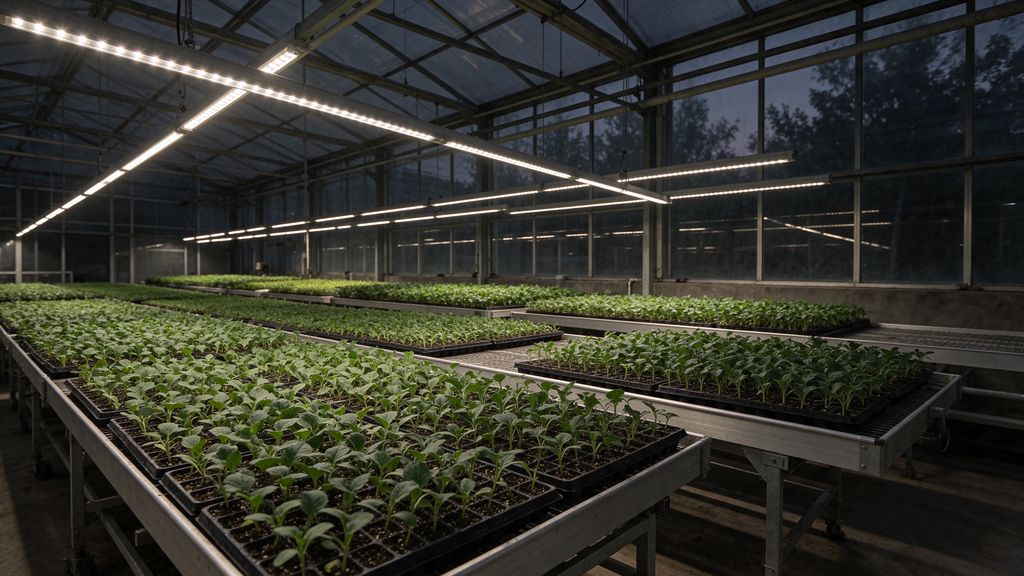
Young plants are grown densely, sold by the tray and judged on uniformity. Light decides how compact and even they are, and how many weeks they occupy the bench.
Why light
Why light matters for young plants
Supplemental light in propagation greenhouses shortens production time and keeps plants compact in the dark months.
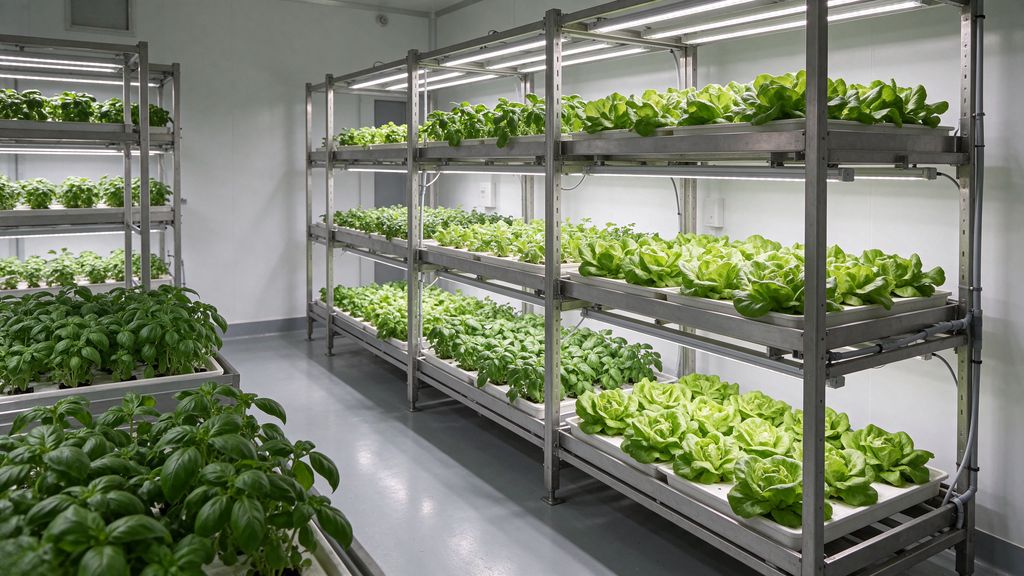
Multilayer racks for seedlings and tissue-culture plants rely entirely on artificial light; growth rooms are always lit.
Uniformity across the bench matters more than the average, because the tray is sold as a unit.
 Research targetsLiterature
- Photoperiod
- 16 h12–18 h
- Supplemental PPFD
- 50–200µmol/m²/s
- Daily light integral
- 10–20mol/m²/day
Ranges reported in the literature. Cultivar, climate, crop stage and market move them; every project begins by agreeing the target for that crop and that house.
The system
Rolling benches under even light
Benches move, trays change daily and the crop stays low. Light has to be even from one bench edge to the other, at a height that leaves room to work.
What WONE delivers
Compact, even plants on a predictable schedule
- 01
Bench and rack layouts
Light planned for rolling benches, multilayer racks and growth rooms, with edges and gaps taken into account.
- 02
Propagation luminaires
Moderate, very even light close to young plants, with spectrum and dimming suited to each stage. A WONE propagation bar is at concept stage.
- 03
Trial and records
Lit and reference benches, with plant height, leaf number and uniformity recorded by tray position.
Explore the model
Rolling benches under toplights. Change spacing, height, output and schedule, and compare the daily light integral month by month with the seedling target.
Explore the modelSimulation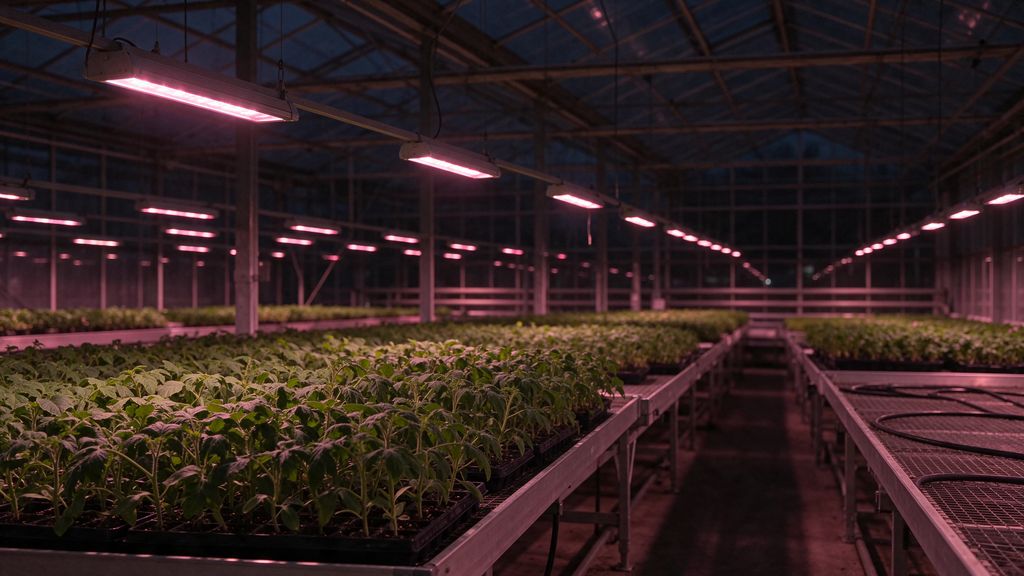
Step 1/5
The benches
Where do the young plants stand?
Rolling benches fill the compartment with narrow aisles. An even field matters more here than a high peak.
Step 2/5
The luminaires
Which layout covers the benches evenly?
Toplights at a height and spacing chosen for the benches. The installed load per square metre is visible from the start.
Step 3/5
Light at the trays
Do edge trays grow like the centre?
The map is read at tray height. Uniformity is the figure to watch: uneven light gives uneven transplants.
Step 4/5
The season
How many hours in the darkest months?
Supplemental hours follow the natural light of each month. The plan shows when the sun is enough and when the lamps must help.
Step 5/5
Measurement
How is quality held batch after batch?
Points across the benches compare every batch with the reference. A dark corner shows up before the plants show it.
Parameters
Decisions
What decides the design
Fixtures for propagation
Seedlings need moderate, very even light close to the canopy. A fixture for this job is designed differently from a toplight for tall crops.
Edges and gaps
Bench edges and the gaps between benches lose light, so a design is judged on the edge trays as well as the centre.
Grafted plants and special stages
Healing chambers after grafting and the first days after sowing have their own light requirements, usually lower and more tightly controlled.
How the result is measured
Measure PPFD at tray height across several benches, edges included.
Record plant quality by tray position: height, leaf number, uniformity.
Log schedules and energy through the season.
Where light pays, and where it does not
In Türkiye the seedling industry is very large, yet demand for lit propagation has not been verified; a measured trial on a few benches is the sensible first step.
Related applications
Discuss your project
Crop, location, structure and what is already installed are enough to begin. We reply with the questions that shape the lighting design and an outline of what we would calculate and measure.