

- WONE Lighting
- Horticultural Lighting
- Digital Twins
Digital twins
Digital twins for horticultural lighting
Each model holds the growing space, the luminaires and the light that reaches the crop. Change a parameter and the light map, the daily total and the energy are recalculated.
Studio
Choose a model and follow the tour
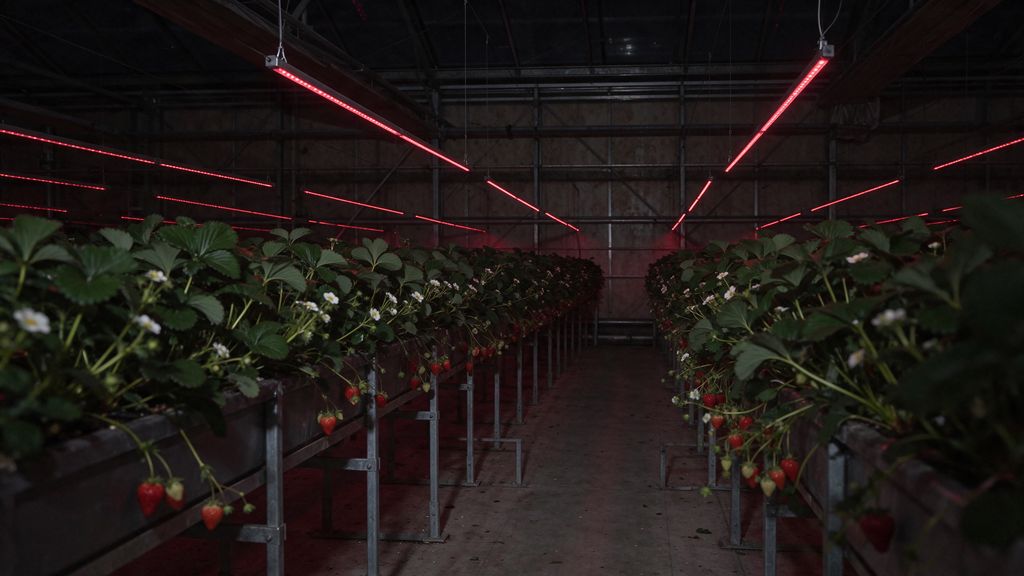
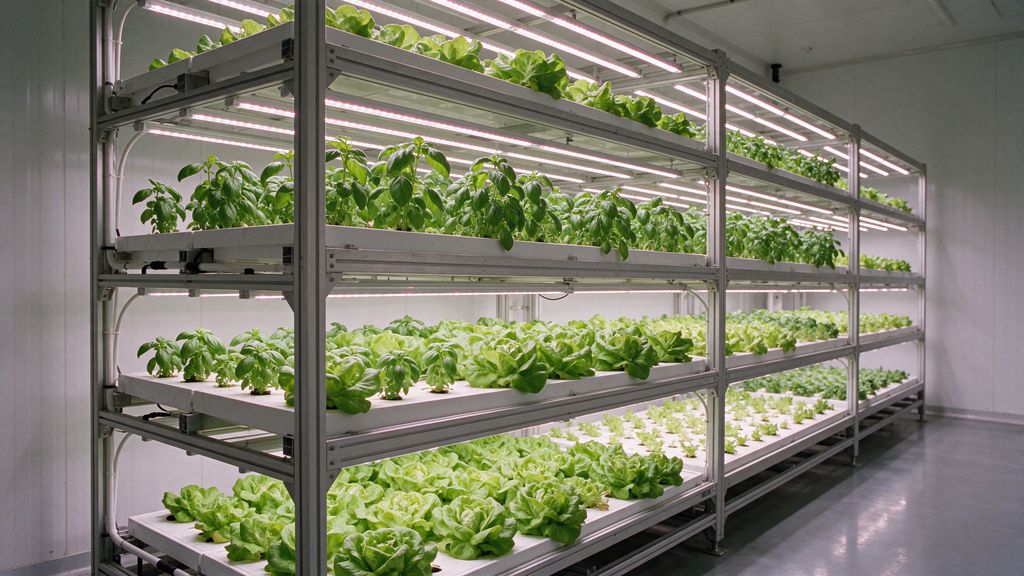
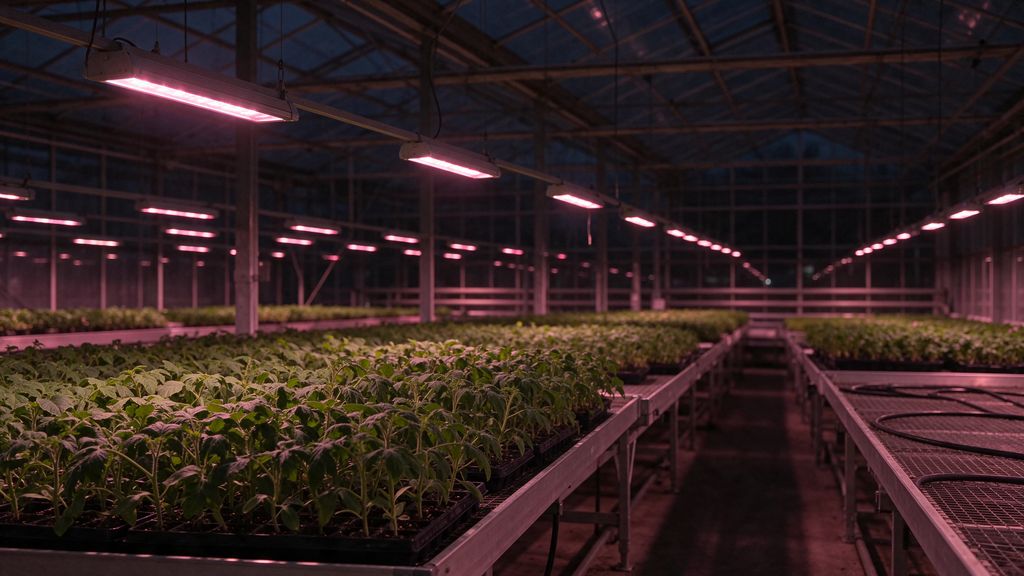
Every tour moves through the space, the luminaires, the light at the crop, the schedule and the measurement points. Drag to look around, walk between the rows or open the parameters to change the layout.
 Greenhouse vegetablesSimulation
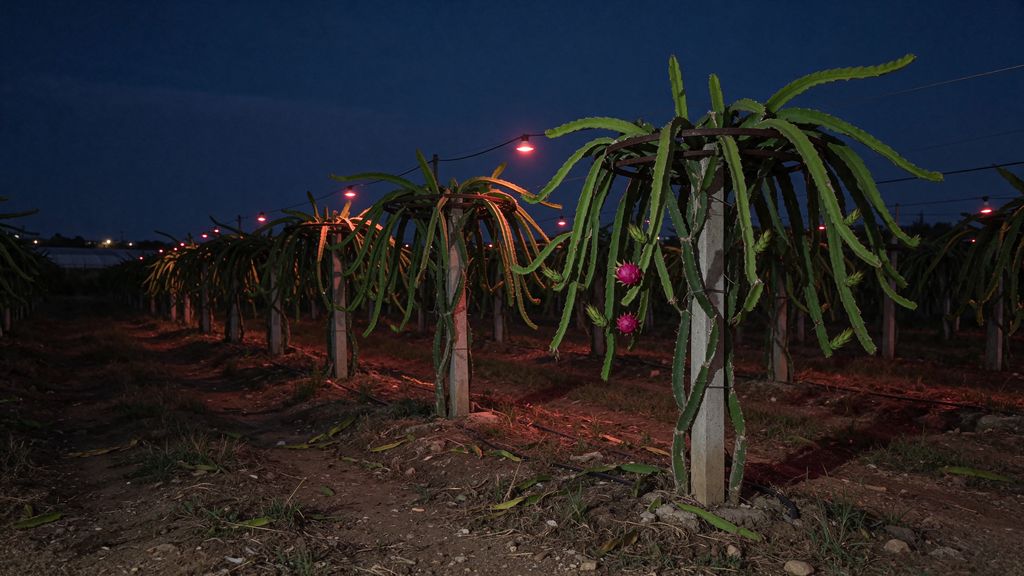
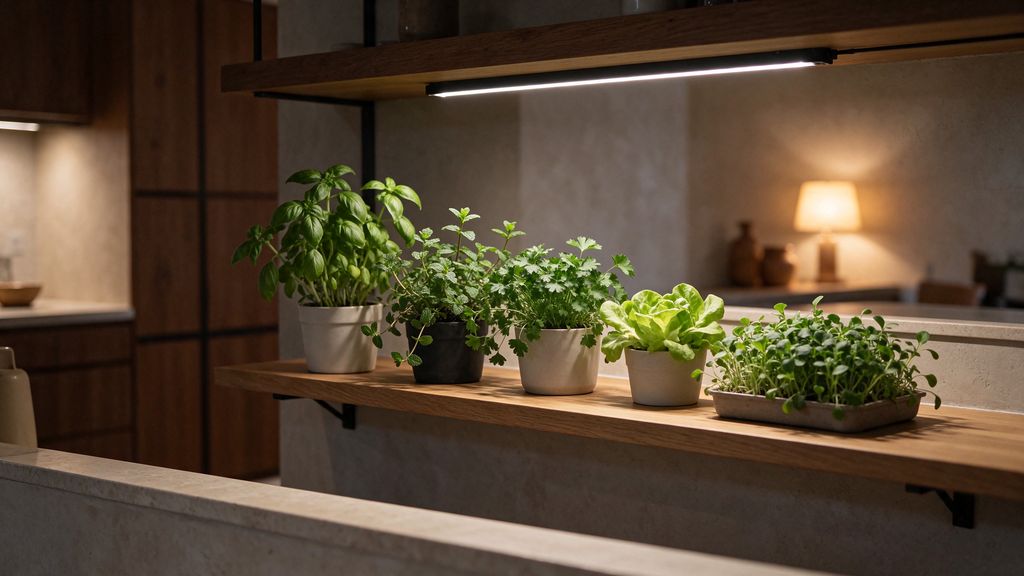
Step 1/5
The compartment
What exactly are we lighting?
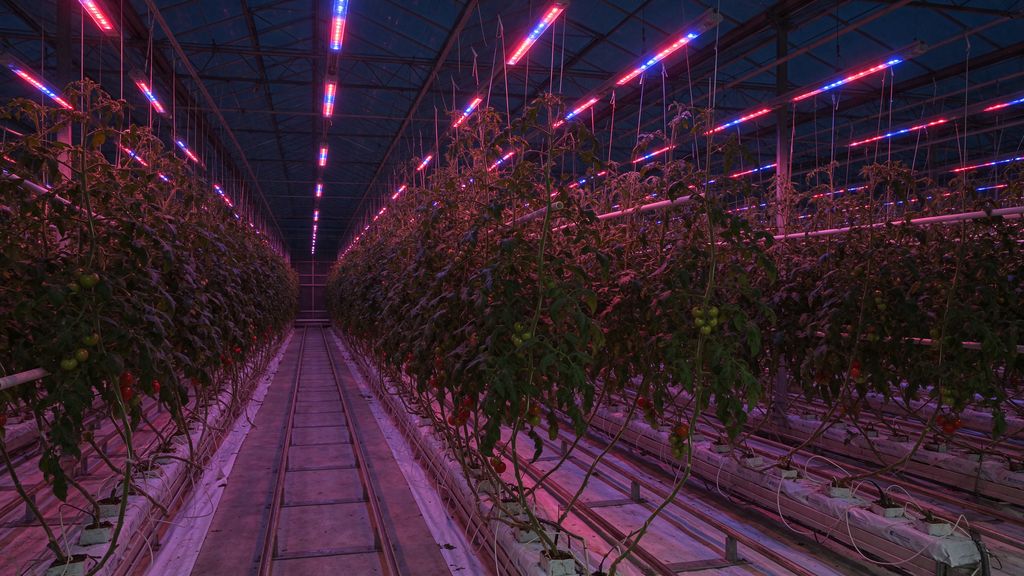
A section of a high multi-span plastic greenhouse with high-wire rows, paths and the canopy at its working height. Every later figure refers to this crop in this space.
Step 2/5
The luminaires
How much light hangs above the rows?
Toplights at a set height and spacing above the wires. The installed load per square metre is known before anything is ordered.
Step 3/5
Light at the canopy
Does every plant get the same light?
The light map is read at the top of the canopy, only where plants stand. Average and uniformity show whether the layout serves the whole row or only its middle.
Step 4/5
The season
How many hours does January need?
Natural light changes month by month. The lamps add only what the sun does not deliver, so hours and kilowatt-hours follow the season.
Step 5/5
Measurement
What changes once sensors are added?
Measurement points sit at canopy height across the section. Linked to sensors, the calculated values become the reference the greenhouse is compared with.
Parameters, comparison and cross-section
Models
The six models in the studio
For the grower
Questions a twin settles before the order
- 01
How many luminaires, and where?
Layout, mounting height and spacing are set against the crop target.
- 02
Does the whole crop get the light?
Uniformity is read where plants stand. Weak edges and dark corners are visible before installation.
- 03
How many hours in each month?
The schedule follows natural light, so hours and energy change with the season and the location.
- 04
What will it draw from the grid?
Installed power and energy per month come from the same model as the light.
- 05
What if the crop changes?
A new target is one more parameter. The model shows what still fits and what has to change.
- 06
Is it working as planned?
Linked to measurement points, the twin sets the calculated light beside what the sensors read.
Linked to measurements
Calculated model and measured greenhouse compared
Sensors at canopy height turn a calculated model into a reference the installation is compared with, day after day.
Levels
From first sketch to operational twin
- Level 1Concept model
Space, crop and luminaire layout in 3D, used to agree the scope.
- Level 2Engineering simulation
Light at the crop, schedule and energy calculated from stated inputs. The studio on this page works at this level.
- Level 3Calibrated model
The simulation checked against measurements taken in the installation after commissioning.
- Level 4Operational twin
The model linked to sensors and controls, following the installation through the season.
Concept
Discuss your project
Crop, location, structure and what is already installed are enough to begin. We reply with the questions that shape the lighting design and an outline of what we would calculate and measure.