
- Home
- Applications
- Greenhouse vegetables
Application · Greenhouse vegetables
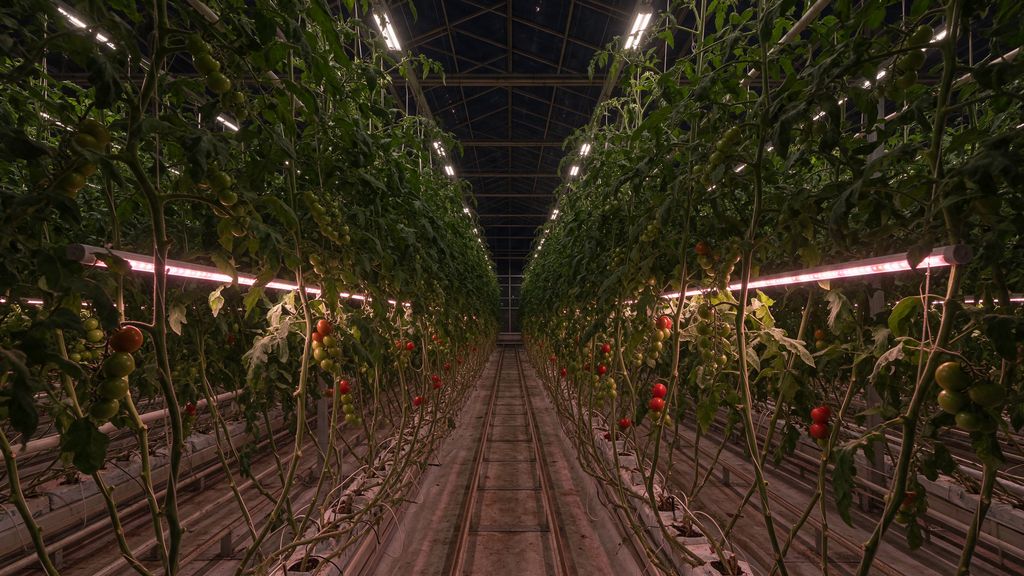
Tomato, pepper and cucumber in tall canopies.
High-wire crops are the core of lit greenhouse production in Canada. The decisions are about how much light, for how many hours, from above or within the canopy, and at what cost per square metre.
What light does for these crops
Toplighting raises the daily light integral when the sun is weak. It is sized in PPFD at the top of the canopy and run for as many hours as the crop tolerates and the economics allow.
Interlighting places light inside the canopy, where lower leaves are otherwise shaded. It is installed per metre of row and judged by the light it delivers to leaves, not by a top-of-canopy map.
Schedules are as important as fixtures. Running lights only when the natural light is short of the target saves energy compared with a fixed schedule.
Tomatoes respond strongly to added light in winter, but they do not tolerate continuous light: photoperiods beyond about 18 hours can injure the leaves, so the daily schedule is capped. Specialty types (cherry, cocktail, on-the-vine) follow the same physics with different economics.
- Photoperiod
- 16 h12–18 h
- Supplemental PPFD
- 100–300µmol/m²/s
- Daily light integral
- 20–30mol/m²/day
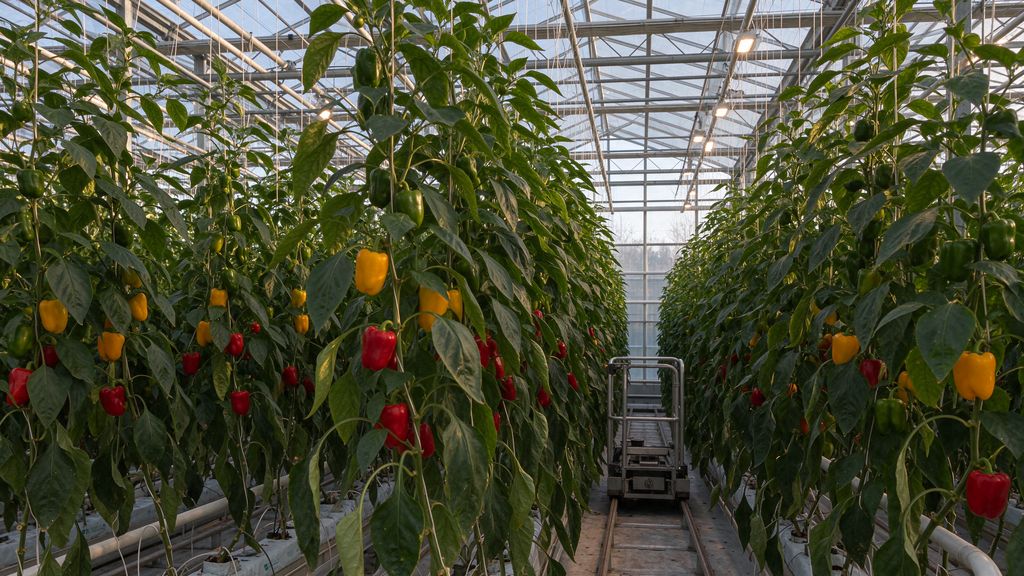
Sweet pepper is grown mostly unlit in Canada; LED winter crops are recent. Pepper canopies are dense and light distribution inside them matters, which is why interlighting is discussed for this crop.
- Photoperiod
- 18 h14–20 h
- Supplemental PPFD
- 80–220µmol/m²/s
- Daily light integral
- 20–30mol/m²/day
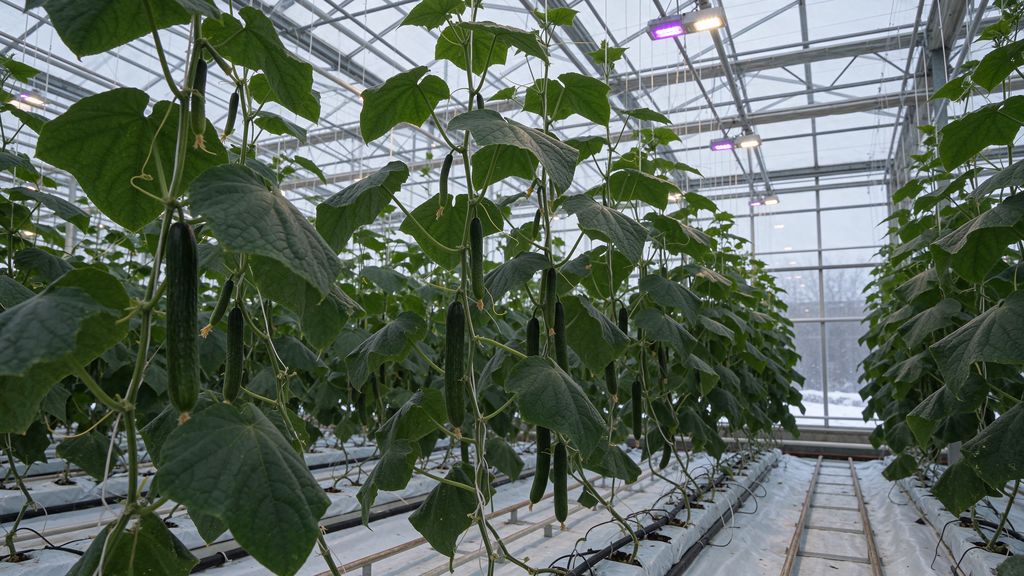
Cucumbers grow fast and are often lit through the winter, with toplights and, at some sites, interlighting. They tolerate longer photoperiods than tomato.
- Photoperiod
- 18 h16–20 h
- Supplemental PPFD
- 100–250µmol/m²/s
- Daily light integral
- 20–30mol/m²/day
Values are ranges reported in the sources listed. Cultivar, climate, stage and production goal move them; a project starts by agreeing the target for that crop.
Try the model
Choose tomato, sweet pepper or cucumber, change luminaires per row, mounting height and output, and compare a fixed schedule with lighting only to reach the daily target. Natural light comes from monthly climate data for the location you pick.
- Dieleman, A., de Gelder, A., Weerheim, K., et al. (2020). Naar een effectief gebruik van LED belichting in de glastuinbouw — Denkkader licht. WUR report WPR-774. doi:10.18174/526138 edepot.wur.nl
- Lanoue, J., Zheng, J., Little, C., Thibodeau, A., Grodzinski, B., Hao, X. (2019). Alternating red and blue light-emitting diodes allows for injury-free tomato production with continuous lighting. Front. Plant Sci. 10:1114. doi:10.3389/fpls.2019.01114 frontiersin.org
- Velez-Ramirez, A.I. et al. (2014). A single locus confers tolerance to continuous light and allows substantial yield increase in tomato. Nat. Commun. 5:4549. nature.com
- Demers, D.A., Dorais, M., Wien, H.C., Gosselin, A. (1998). Effects of supplemental light duration on greenhouse tomato (Lycopersicon esculentum Mill.) plants and fruit yields. Sci. Hortic. 74(4):295-306. acnpsearch.tweb-dev.unibo.it
- Demers, D.A., Gosselin, A., Wien, H.C. (1998). Effects of supplemental light duration on greenhouse sweet pepper plants and fruit yields. J. Amer. Soc. Hort. Sci. agris.fao.org
- Runkle, E. Investment considerations for greenhouse lighting. Michigan State Univ. Floriculture / GPN 'Under Control'. canr.msu.edu
- Runkle, E. (2011). Lighting greenhouse vegetables. GPN / Michigan State Univ. canr.msu.edu
- Marcelis, L.F.M., Broekhuijsen, A.G.M., Meinen, E., Nijs, E.M.F.M., Raaphorst, M.G.M. (2006). Quantification of the growth response to light quantity of greenhouse grown crops. Acta Hortic. 711:97-104. ishs.org
- Dueck, T.A. et al. (2012). Growth of tomatoes under hybrid LED and HPS lighting. Acta Hortic. 952. research.wur.nl
- van Baar, P.H. (Delphy Improvement Centre) / Signify Hortiblog (2018 trial). Combining HPS and LED lights for higher tomato yields and longer illumination periods. lighting.philips.co.uk
- Hao, X., Zheng, J., Little, C., Khosla, S. (2012). LED inter-lighting in year-round greenhouse mini-cucumber production. Acta Hortic. 956:335-340. doi:10.17660/ActaHortic.2012.956.38 ishs.org
- Lanoue, J., Zheng, J., Little, C., Grodzinski, B., Hao, X. (2021). Continuous light does not compromise growth and yield in mini-cucumber greenhouse production with supplemental LED light. Plants 10(2):378. doi:10.3390/plants10020378 mdpi.com
- Guo, X., Hao, X., Khosla, S., Kumar, K.G.S., Cao, R., Bennett, N. (2016). Effect of LED interlighting combined with overhead HPS light on fruit yield and quality of year-round sweet pepper in commercial greenhouse. Acta Hortic. 1134:71-78. doi:10.17660/ActaHortic.2016.1134.10 ishs.org
- Massey University thesis (pepper seedling DLI; commercial tomato/pepper 20-30 mol/m²/d). mro.massey.ac.nz
- Wuetcher, L.T., Owen, W.G. (2025-03-11). Managing daily light integral to improve vegetable transplant quality. Purdue Vegetable Crops Hotline 749 (e-GRO). vegcropshotline.org
Uniformity at the top of the canopy
Average PPFD hides dark rows. We report min/avg and the coefficient of variation over the crop rows only, not over paths and walls.
Photoperiod caps
Each crop has a practical upper limit on lit hours. The model caps the schedule per crop and shows when even the maximum cannot reach the target.
Heat and humidity
LED toplights put less radiant heat on the crop than older lamps, which changes heating demand and climate control. We flag the effect for the climate engineer; it is not modelled here.
Retrofit before rebuild
Many sites already have lamps, power and controls. We start from what is installed and look at zoning, schedules and partial replacement before full replacement.
How we would measure it
Map PPFD at canopy height on a fixed grid with lights on and the sun excluded (night measurement).
Log schedules, dimming levels and natural light from the climate computer for at least one month.
Compare measured averages and uniformity with the design calculation; explain any difference.
Repeat after changes, at the same points.
Where light pays, and where it does not
In Canada, lit tomato and cucumber production is established and toplighting retrofits are a real market, best served with certified luminaires already on the market and good controls. In most of Türkiye, high-power toplighting for these crops does not pay at current produce prices; heated and geothermal glasshouses are the exception worth calculating.
Canada and Türkiye
Canada: tomatoes and cucumbers in Essex County (Leamington, Kingsville), Niagara and Hamilton, British Columbia and Québec; Ontario growers report more than a thousand acres under lights. Türkiye: protected tomato, pepper and cucumber production is concentrated in Antalya and Mersin and is mostly unlit.
Evidence and sources (15)
- Dieleman, A., de Gelder, A., Weerheim, K., et al. (2020). Naar een effectief gebruik van LED belichting in de glastuinbouw — Denkkader licht. WUR report WPR-774. doi:10.18174/526138 edepot.wur.nl
- Lanoue, J., Zheng, J., Little, C., Thibodeau, A., Grodzinski, B., Hao, X. (2019). Alternating red and blue light-emitting diodes allows for injury-free tomato production with continuous lighting. Front. Plant Sci. 10:1114. doi:10.3389/fpls.2019.01114 frontiersin.org
- Velez-Ramirez, A.I. et al. (2014). A single locus confers tolerance to continuous light and allows substantial yield increase in tomato. Nat. Commun. 5:4549. nature.com
- Demers, D.A., Dorais, M., Wien, H.C., Gosselin, A. (1998). Effects of supplemental light duration on greenhouse tomato (Lycopersicon esculentum Mill.) plants and fruit yields. Sci. Hortic. 74(4):295-306. acnpsearch.tweb-dev.unibo.it
- Demers, D.A., Gosselin, A., Wien, H.C. (1998). Effects of supplemental light duration on greenhouse sweet pepper plants and fruit yields. J. Amer. Soc. Hort. Sci. agris.fao.org
- Runkle, E. Investment considerations for greenhouse lighting. Michigan State Univ. Floriculture / GPN 'Under Control'. canr.msu.edu
- Runkle, E. (2011). Lighting greenhouse vegetables. GPN / Michigan State Univ. canr.msu.edu
- Marcelis, L.F.M., Broekhuijsen, A.G.M., Meinen, E., Nijs, E.M.F.M., Raaphorst, M.G.M. (2006). Quantification of the growth response to light quantity of greenhouse grown crops. Acta Hortic. 711:97-104. ishs.org
- Dueck, T.A. et al. (2012). Growth of tomatoes under hybrid LED and HPS lighting. Acta Hortic. 952. research.wur.nl
- van Baar, P.H. (Delphy Improvement Centre) / Signify Hortiblog (2018 trial). Combining HPS and LED lights for higher tomato yields and longer illumination periods. lighting.philips.co.uk
- Hao, X., Zheng, J., Little, C., Khosla, S. (2012). LED inter-lighting in year-round greenhouse mini-cucumber production. Acta Hortic. 956:335-340. doi:10.17660/ActaHortic.2012.956.38 ishs.org
- Lanoue, J., Zheng, J., Little, C., Grodzinski, B., Hao, X. (2021). Continuous light does not compromise growth and yield in mini-cucumber greenhouse production with supplemental LED light. Plants 10(2):378. doi:10.3390/plants10020378 mdpi.com
- Guo, X., Hao, X., Khosla, S., Kumar, K.G.S., Cao, R., Bennett, N. (2016). Effect of LED interlighting combined with overhead HPS light on fruit yield and quality of year-round sweet pepper in commercial greenhouse. Acta Hortic. 1134:71-78. doi:10.17660/ActaHortic.2016.1134.10 ishs.org
- Massey University thesis (pepper seedling DLI; commercial tomato/pepper 20-30 mol/m²/d). mro.massey.ac.nz
- Wuetcher, L.T., Owen, W.G. (2025-03-11). Managing daily light integral to improve vegetable transplant quality. Purdue Vegetable Crops Hotline 749 (e-GRO). vegcropshotline.org
Figures are calculated or taken from published sources. Nothing on this page is a measured result of a WONE installation.
Tell us about the crop and the space.
The crop, the location, the structure and what is already installed are enough to start. We reply with the questions that decide the lighting design and an outline of the measurements we would take.